









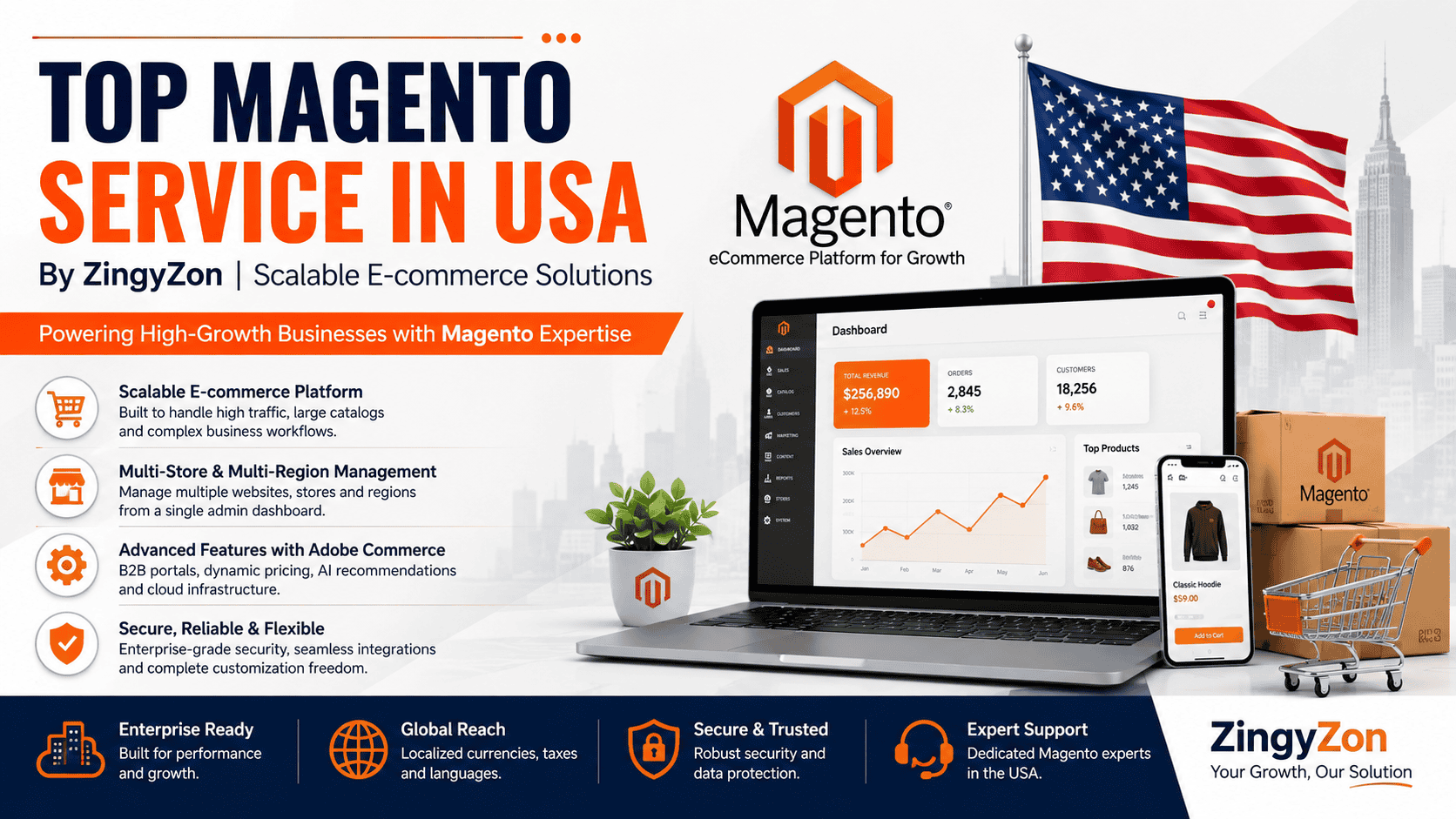
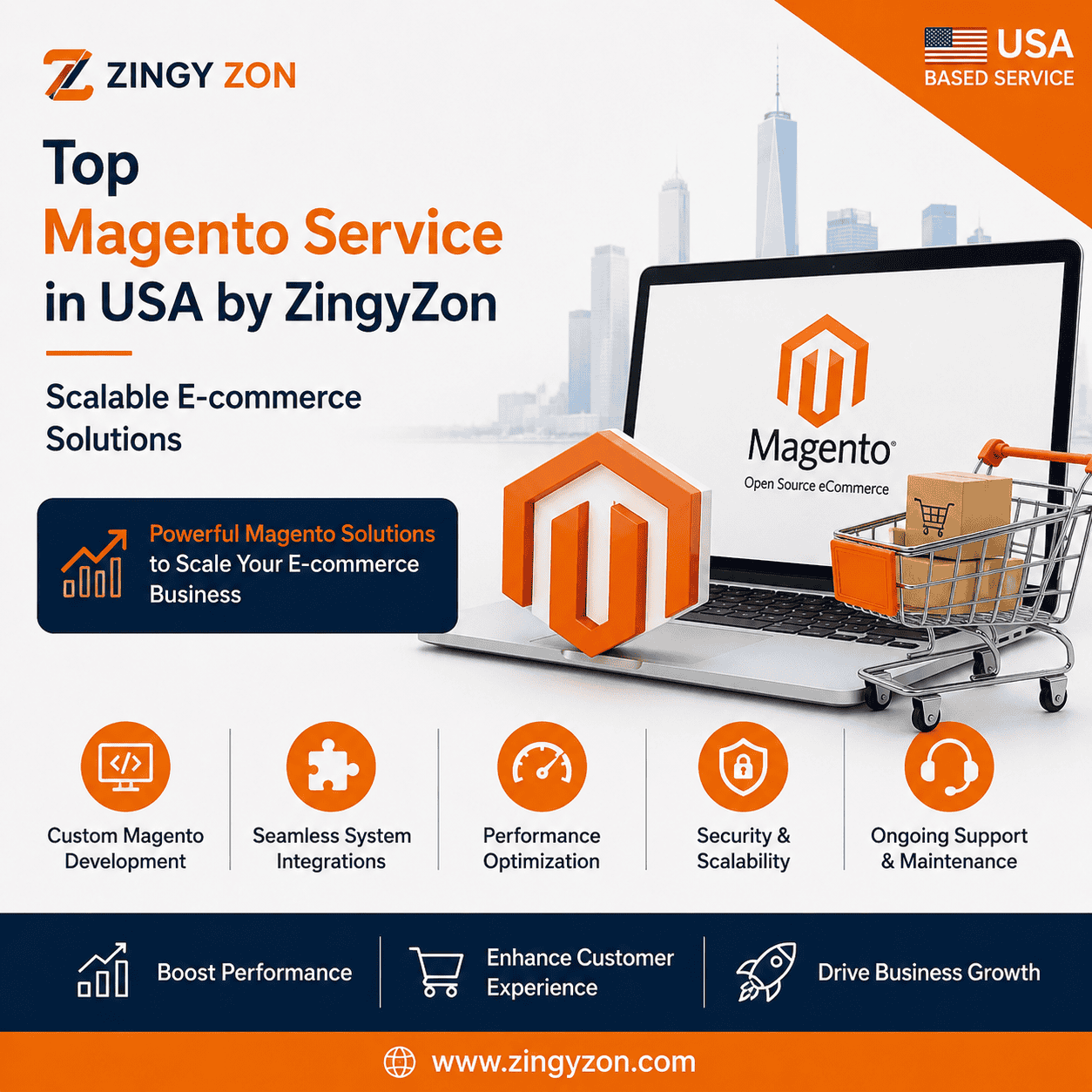
ZingyZon provides access to top Magento service solutions in the USA designed to help e-commerce businesses scale through custom development, system integrations, and performance optimization. These enterprise solutions connect online stores with modern technical infrastructure to ensure stable long-term business growth.
Enterprise Magento Platform Architecture and Ecosystem
Magento is an enterprise e-commerce platform built for high-growth businesses and corporate brands. The system uses an Entity-Attribute-Value database structure. This database design allows online stores to manage massive product catalogs with complex custom attributes. Businesses in the USA rely on Magento because it handles high transaction volumes and complex business workflows from one management dashboard.
The platform operates through two primary software editions. Magento Open Source provides core e-commerce capabilities. These capabilities include catalog management, customer accounts, payment processing, checkout flows, and search tools. Adobe Commerce offers advanced enterprise functionality. These advanced features include automated B2B customer portals, dynamic pricing rules, AI-driven product recommendations, and managed cloud hosting infrastructure.
Magento supports complex multi-store and multi-region business models. A single administrative dashboard can manage multiple websites, individual stores, and localized store views. Each store view can use distinct domain names, unique catalog structures, localized currencies, specific tax rates, and target language options. This capability allows US companies to run multiple regional outlets or separate product brands without building independent websites.
| Platform Edition | Target Business Size | Core Caching Strategy | Multi-Store Capabilities | Primary Integration Protocol | Primary Best Use Case |
| Magento Open Source | Small to Mid-Sized Businesses | Built-in FPC and Varnish | Single Admin with Multiple Store Views | REST and GraphQL APIs | Standard B2C Stores with Custom Design Needs |
| Adobe Commerce On-Premise | Mid-Sized to Large Enterprises | Varnish and Redis Cluster | Unlimited Websites, Stores, and Views | REST, GraphQL, and Message Queues | Complex B2B and B2C Multi-Brand Stores |
| Adobe Commerce Cloud | Global Enterprise Brands | Fastly CDN and Varnish Edge Caching | Geo-Distributed Infrastructure | API-First Integration Framework | High-Traffic Global Stores Needing Auto-Scaling |
| Headless Magento | High-Growth Digital Brands | Edge Caching and External Frontends | Multi-Channel Headless Endpoints | GraphQL and Microservices APIs | Fast Omnichannel PWA and SPA Applications |
Core Magento Development Services for US Businesses
Custom Magento Store Development
Custom Magento store development focuses on engineering digital storefronts tailored to specific commercial operations. Certified development teams build custom database layouts, dedicated catalog search filters, and tailored checkout steps. Single-vendor retail websites receive bespoke navigation menus, targeted landing pages, and secure payment processing options. Multi-vendor e-commerce marketplaces allow site administrators to manage independent seller accounts, calculate vendor commissions, and split customer orders across multiple fulfillment locations. Custom store builds ensure user interfaces align with brand identity while providing full responsive access across mobile devices.
Platform Migration Workflows
Migrating an e-commerce platform from legacy environments like Shopify, WooCommerce, or Magento 1 to Magento 2 requires structured data management. The migration workflow transfers critical business records without operational downtime. Customer account histories, catalog category structures, product attribute sets, past order records, and backend configurations undergo automated data transformation.
Preserving search engine ranking authority requires detailed technical mapping during platform migration. Development teams build comprehensive 301 redirect lists that map legacy web page URLs to new Magento page structures. Preserving these path configurations protects accumulated backlink value and domain authority in search engine indexes. Post-migration testing validates data accuracy, ensuring order records and user credentials remain intact after site launch.
Custom Extension and Plugin Engineering
Standard third-party extension packages often contain redundant code that slows down server execution speeds. Custom plugin engineering creates lightweight software modules built for specific business requirements. Developers write clean module code that adheres to official Magento core guidelines. Custom extensions can introduce targeted pricing matrices, automated tax calculation tools, dynamic shipping calculators, or custom customer rewards programs. Custom extension development prevents software conflicts, minimizes memory usage, and ensures safe future upgrade paths.
System Integration and Technology Ecosystem Sync
Enterprise Resource Planning and Warehouse Systems
High-volume Magento stores require synchronized backend infrastructure to handle continuous commercial operations. Integrating Magento with Enterprise Resource Planning systems like SAP, NetSuite, or Microsoft Dynamics automates essential back-office workflows. When a customer places an order, the integration transmits order details to the ERP system for financial recording and invoice creation.
Warehouse Management System integrations link physical inventory tracking directly with online product listings. Inventory updates recorded at physical fulfillment centers sync back to the Magento catalog automatically. Real-time inventory synchronization prevents accidental overselling, eliminates manual data entry tasks, and accelerates product dispatch schedules.
Product Information Management and Payment Gateways
Managing extensive product catalogs containing tens of thousands of SKUs requires dedicated product management software. Product Information Management platforms such as Akeneo or Pimcore integrate directly with Magento. Product teams manage master attributes, localized marketing text, media galleries, and technical data within the PIM. The integration updates Magento store catalogs automatically, maintaining consistent product descriptions across multi-channel marketplaces.
Payment gateway integrations link Magento with financial platforms, digital wallets, credit card processors, and buy-now-pay-later solutions. Secure tokenized API channels transmit checkout credentials without storing sensitive card details on web servers. Automated reconciliation scripts compare online transaction logs with banking statements, simplifying accounting audits for corporate finance teams.
| Target System Type | Data Flow Direction | Primary Protocol | Operational Purpose | Synchronization Frequency |
| ERP Platforms | Bi-Directional | REST API and Webhooks | Order Sync, Customer Records, Invoicing | Real-Time Batch |
| Warehouse Management Systems | Bi-Directional | Asynchronous REST | Inventory Adjustments, Tracking Numbers | Near Real-Time |
| Product Information Systems | Inbound to Magento | GraphQL and REST | Master Product Data, Categories, Media | Scheduled Batches |
| Payment Gateways | Bi-Directional | Tokenized REST API | Payment Auth, Refunds, Reconciliation | Instant Real-Time |
| CRM Solutions | Bi-Directional | REST API | Customer Profiles, Purchase History | Periodic Sync |
| Automated Shipping Carriers | Outbound from Magento | REST and SOAP | Label Generation, Rate Calculations | Real-Time Checkout |
Performance Optimization and Multi-Layer Caching Strategies
Varnish Full-Page Caching and Grace Mode Configuration
Page loading speed directly impacts user conversion rates and organic search positions. Magento utilizes Varnish cache as its primary full-page caching accelerator. Varnish sits in front of application web servers as an HTTP reverse proxy. When visitors request catalog pages, Varnish serves pre-rendered HTML content straight from server memory. This bypasses PHP scripts and database execution completely, dropping page response times below 50 milliseconds.
Varnish Grace Mode provides continuous website stability during traffic spikes or unexpected backend server failures. Configured using the grace setting in the Varnish Configuration Language file, Grace Mode permits Varnish to serve stale cached pages to users if backend application servers become slow or unresponsive. If a database process times out during a flash sale, visitors continue viewing functional web pages instead of encountering server error messages. This mechanism keeps checkout paths open and prevents transaction losses during backend maintenance windows.
Redis In-Memory Storage and Session Failover
While Varnish accelerates static frontend page delivery, Redis manages dynamic backend data storage. Redis is an in-memory key-value data structure store used by Magento for object caching, application cache storage, and session management. Storing active customer cart states, session tokens, and user permissions in Redis prevents database locks and lowers MySQL server workload.
High-availability infrastructure builds deploy Redis Sentinel or Redis Cluster configurations. Redis Sentinel provides active node monitoring and automatic failover capabilities. If the primary Redis master node fails, Sentinel promotes a standby secondary node to master status automatically. This transition preserves active customer cart contents and user login sessions without disrupting shopper interactions. Redis also supports tag-based cache purging, allowing Magento to clear targeted product cache tags when administrative users update catalog items.
| Caching System | Operational Layer | Primary System Function | Failover Strategy | Server Resource Impact |
| Varnish Cache | HTTP Reverse Proxy | Pre-Rendered Full-Page HTML Delivery | High Protection via Grace Mode | Reduces Web Server CPU Utilization by over 90% |
| Redis Cache | Application Memory | Session Management and Object Cache | High Protection via Redis Sentinel | Reduces MySQL Read and Write Operations |
| Content Delivery Network | Global Network Edge | Asset Acceleration and Media Caching | High Protection via Edge Nodes | Offloads Bandwidth from Origin Servers |
| Magento Built-In FPC | Application Layer | Native Page Caching in PHP | Low Protection (Requires PHP Engine) | Moderate Load Reduction; Slower than Varnish |
Modern Storefront Frontends: Hyvä Themes and Headless Commerce
Hyvä Theme Implementation
Standard Magento 2 store frontends traditionally rely on the default Luma theme framework. The Luma framework uses legacy JavaScript libraries, including RequireJS, Knockout.js, and complex layout XML files. These combined dependencies create large script bundle sizes, delay initial layout rendering, and lower Google Core Web Vitals scores.
Hyvä themes offer a modern frontend architecture built specifically for Magento 2. Hyvä removes RequireJS, Knockout.js, and heavy jQuery components completely. The storefront renders pages using Alpine.js for lightweight frontend interactions and Tailwind CSS for utility styling. Replacing thousands of legacy JavaScript assets with Alpine.js drops total client script payloads from several megabytes down to under 100 kilobytes. Stores built with Hyvä regularly achieve Google PageSpeed ratings above 90, improving mobile loading speeds and conversion rates.
Headless Commerce and Progressive Web Applications
Headless architecture decouples the backend e-commerce management engine from the frontend presentation layer. The backend Magento core manages business rules, process transactions, and handles inventory tracking while exposing data endpoints through a GraphQL API layer. Modern frontend user interfaces are developed independently using frameworks such as React, Next.js, or Vue.js.
Progressive Web Applications built with Magento PWA Studio or Vue Storefront deliver native application features through mobile web browsers. Service workers cache application code locally on customer devices, enabling offline product browsing, rapid screen transitions, and push notifications. Decoupled headless setups allow marketing teams to update design elements quickly without altering core backend code, reducing deployment deployment risks.
| Storefront Solution | Core Technical Stack | Core Web Vitals Performance | Development Complexity | Primary Target Application |
| Default Luma Theme | RequireJS, Knockout.js, jQuery | Low Performance (High LCP and INP) | Moderate Complexity | Legacy Stores with Limited Budgets |
| Hyvä Themes Framework | Alpine.js, Tailwind CSS | High Performance (Passes Web Vitals) | Low to Moderate Complexity | Modern Magento Stores Needing Speed |
| Magento PWA Studio | React, GraphQL, Workbox | High Performance (Fast Client Render) | High Complexity | Mobile-First Stores Requiring Offline Use |
| Headless Next.js Build | React, Next.js, GraphQL | High Performance (Edge SSR Rendering) | High Complexity | Enterprise Brands with Multi-Channel Outlets |
Technical Search Engine Optimization and Infrastructure
Technical On-Page Optimization and Structured Data Markup
Search engine visibility relies on clear code structures, rapid crawl execution, and precise metadata placement. ZingyZon technical SEO standards require automated XML sitemaps, clean canonical tag management, and lightweight rendering paths. XML sitemaps present search engine crawlers with clean architectural paths to active category and product pages, encouraging rapid indexing of catalog changes. Canonical tags prevent duplicate content issues created by dynamic product filtering, layered navigation, and multi-category assignments.
Structured JSON-LD schema code provides search engines with context regarding store content. Local business schema scripts validate corporate identity markers, geographic operational coordinates, and direct contact details. Product schema implementation injects detailed inventory data into search results.
Product schema structured text specifies standard schema context and type definitions, including the product name, visual image location, detailed description text, and unique stock keeping unit numbers. The embedded offer section defines transaction parameters, detailing currency types, numerical purchase prices, and current inventory availability status. Including schema metadata allows search engines to display price tags, stock status, star reviews, and product thumbnails directly within organic search lists, increasing organic click rates.
Core Web Vitals and User Experience Tuning
Google evaluates website quality using Core Web Vitals performance benchmarks. Technical optimization teams focus on meeting three primary performance metrics:
Largest Contentful Paint measures main visual content loading speed. The primary visual element must render within 2.5 seconds of initial page request.
Interaction to Next Paint measures user interface responsiveness. Page actions, such as button clicks or menu drops, must process visual updates in under 200 milliseconds.
Cumulative Layout Shift measures visual layout stability. Unexpected layout shifts during page loading must maintain a score below 0.1.
Improving these web metrics requires targeted server and code adjustments. Unused layout XML components must be removed to minimize total DOM size. CSS and JavaScript files require minification, file combining, and inline critical path execution. Preloading primary display fonts and deferring non-essential third-party tracking scripts eliminates visual render blocks. Edge delivery platforms automatically compress and convert image assets into modern WebP or AVIF formats based on user browser compatibility, lowering file payload sizes without degrading image quality.
Scoping, Project Calculators, and Deployment Planning
Web Development Budget and Scope Estimation
Planning an enterprise Magento deployment requires accurate estimation tools to assess technical resource needs. Utilizing web cost calculators and dedicated SEO budget estimators provides clear financial scope early in project planning. Technical variables influencing development budgets include:
Total page count and catalog category template requirements.
Custom enterprise API integrations for ERP, WMS, and CRM platforms.
Dedicated custom module and plugin engineering needs.
Frontend architecture selection, including Hyvä, PWA Studio, or custom headless React builds.
Cloud hosting infrastructure, server auto-scaling rules, and CDN licensing tiers.
Calculating precise budget models before writing code avoids unexpected costs, aligns commercial goals with technical resources, and establishes realistic ROI timelines.
Enterprise Deployment Implementation Roadmap
| Implementation Phase | Key Operational Tasks | Deliverable Output | Milestone Timeline |
| Phase 1: Audit and Discovery | Analyze legacy platform data, assess code debt, map API requirements | Architecture Blueprint and Scope Plan | Weeks 1 to 3 |
| Phase 2: Design and Wireframing | Design mobile layouts, create user flows, approve Hyvä or PWA mockups | Approved UX and UI Visual Wireframes | Weeks 4 to 6 |
| Phase 3: Core Platform Build | Configure product attributes, build custom extensions, set up multi-store admin | Staging Build with Core Store Features | Weeks 7 to 12 |
| Phase 4: Systems Integration | Connect ERP, WMS, PIM, and payment channels via secure REST and GraphQL APIs | Working Bi-Directional Data Pipelines | Weeks 13 to 16 |
| Phase 5: Optimization and Testing | Configure Varnish and Redis, perform security audits, optimize Core Web Vitals | Verified 90+ PageSpeed and Security Audit | Weeks 17 to 18 |
| Phase 6: Production Launch | Execute DNS cutover, verify 301 redirects, monitor server load and search indexing | Live Production Store Operating in USA | Week 19 |
Security Audits, Maintenance, and Infrastructure Governance
Security Audits and Patch Management
E-commerce websites process private consumer payment data, making platform security a top priority. Regular security audits identify system vulnerabilities, verify SSL certificates, and maintain compliance with Payment Card Industry Data Security Standards. Adobe issues periodic security patches to fix platform code vulnerabilities. Security maintenance includes installing official security updates, running file integrity checks, and enforcing multi-factor authentication across administrative accounts.
Code quality audits examine backend codebase health, identifying slow database queries and non-standard custom code. Reviewers check code compliance against Magento guidelines, verify database index coverage, and clean legacy database tables. Trimming session log tables and disabling unused core modules lowers server resource utilization and keeps application operations stable over time.
Observability, Support, and Continuous Integration
Maintaining maximum platform uptime requires continuous server monitoring and operational technical support. Observability tools like New Relic APM, Grafana, and Kibana track application speed, database execution times, and server memory allocations. Real-time log monitoring systems detect application exceptions, API timeout errors, or payment processor issues instantly.
Automated continuous integration and continuous deployment pipelines ensure safe application releases. Automated deployment workflows run code syntax checks, software unit tests, and integration verification scripts before deploying changes to live server environments. Scheduled database backups, 24/7 technical support access, and rapid bug resolution protocols protect digital stores from downtime, ensuring business continuity across all US commercial channels.