









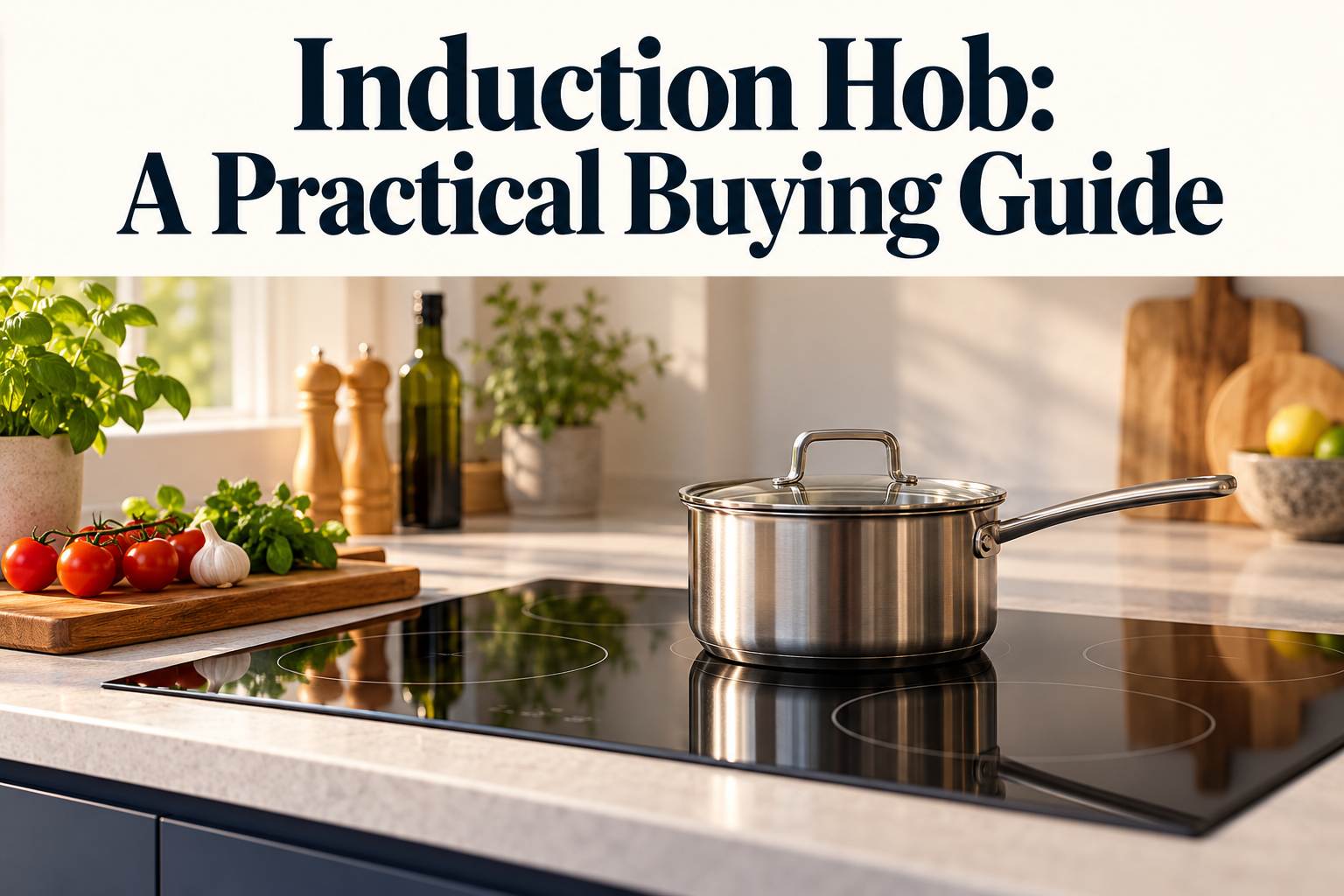
An induction hob uses an electromagnetic field to heat compatible cookware directly. It offers responsive cooking without a gas flame, but buying the right model also means checking your pans, electrical supply and kitchen layout.
The best choice is the one that fits the way you actually cook. A large glass surface or a long feature list will not help if your favourite pans cannot fit together or the controls are awkward to use.
How an Induction Hob Works
The US Department of Energy explains induction cooking as a process in which an electromagnetic field creates heat within the cookware. This differs from a conventional electric hob, where an element heats the cooking surface and the pan receives that heat.
The practical benefit is control. When you change a setting, you are changing the energy supplied to the pan rather than waiting for a heavy hotplate to cool. The surface can still become hot from contact with the pan, so a recently used cooking zone should always be treated carefully.
Which Pans Are Suitable?
Cookware needs a suitable magnetic base. Bosch’s induction-pan guidance explains the need for ferromagnetic cookware, while the pan manufacturer’s compatibility marking is a useful check before purchase.
A magnet sticking firmly to a flat base is a practical first test. Also check the hob manual for minimum pan dimensions and zone requirements. An old pan that works on one large cooking area may not be a good match for a small detection zone.
Before replacing your whole collection, make a short inventory. Include the frying pan you use most, your smallest saucepan and any large casserole. This gives you a more realistic replacement budget than assuming every pan must be discarded.
Installation Checks Before You Buy
Record the exact model number and download its installation instructions. Check the worktop cutout, clearance below the appliance, ventilation requirements and any restrictions on drawers or ovens beneath it. External width alone does not establish that it will fit an existing opening.
Have a qualified installer assess the required supply and connection. Different appliances can have very different power requirements, and a portable single-zone unit should not be treated as equivalent to a built-in multi-zone hob. Include installation work in the comparison price.
For a wider renovation, our guide to planning questions for an ADU contractor offers a related example of defining project requirements before choosing equipment. Local construction requirements should always be checked for your own location.
Compare Controls and Usable Space
Choose a layout by imagining a normal meal. Can a large frying pan sit beside two saucepans without handles overlapping? Can you reach the controls when a large pot occupies the front cooking area? A showroom demonstration or a full-size paper layout can help.
Look at how settings are changed. A direct slider, individual zone controls and a shared plus/minus control can feel quite different in use. If you often cook with wet hands, ask to try the interface under the conditions the manufacturer permits.
Features such as timers, child locks and linked cooking areas can be useful, but their operation varies. Read the actual manual rather than assuming two products with similar marketing terms behave identically.
Running Costs and the Total Budget
ENERGY STAR’s electric cooking guidance identifies induction as direct electromagnetic heating of compatible cookware. Efficiency is a reason to compare it, but it does not guarantee a specific reduction in your household bill.
Your electricity tariff, cooking habits, pan choice and the appliance you replace all affect the result. Compare complete purchase costs: hob, installation, cookware and any worktop changes. Avoid using a different country’s energy prices to predict your own savings.
As with the distinction between driving settings and actual energy use in our Cadillac LYRIQ energy guide, a feature label is only one part of a real-world energy calculation.
Everyday Care and Common Frustrations
Follow the manual for cleaning products and allow the surface to cool as instructed. Lift heavy cookware rather than dragging it across the glass, and remove spills using the manufacturer’s recommended method.
If a zone does not detect a pan, start with compatibility, position and base size. Note any displayed code and consult the correct model’s instructions. Repeatedly changing settings is less useful than identifying the exact warning.
Consider a demonstration before committing if noise, touch controls or very low simmering performance matter to you. These are model-specific details, so a broad claim about all induction hobs is a poor substitute for checking the appliance you intend to buy.
Frequently Asked Questions
Does an induction hob need special pans?
It needs cookware with a compatible magnetic base. Check the pan marking and the hob manual before buying replacements.
Is the glass surface always cold?
No. Hot cookware can transfer heat back to the surface, so use the residual-heat indicators and follow the safety instructions.
Can it replace an electric hob in the same opening?
Possibly, but verify the exact cutout, clearances and electrical requirements. Similar external dimensions do not prove compatibility.
Will induction automatically lower my bills?
No specific saving is guaranteed. Compare your tariffs, cooking habits and total installation cost.
What should I check first?
Check pan compatibility, the installation manual and whether your usual cookware fits the zone layout.


One thought on “Induction Hob: A Practical Buying Guide”