








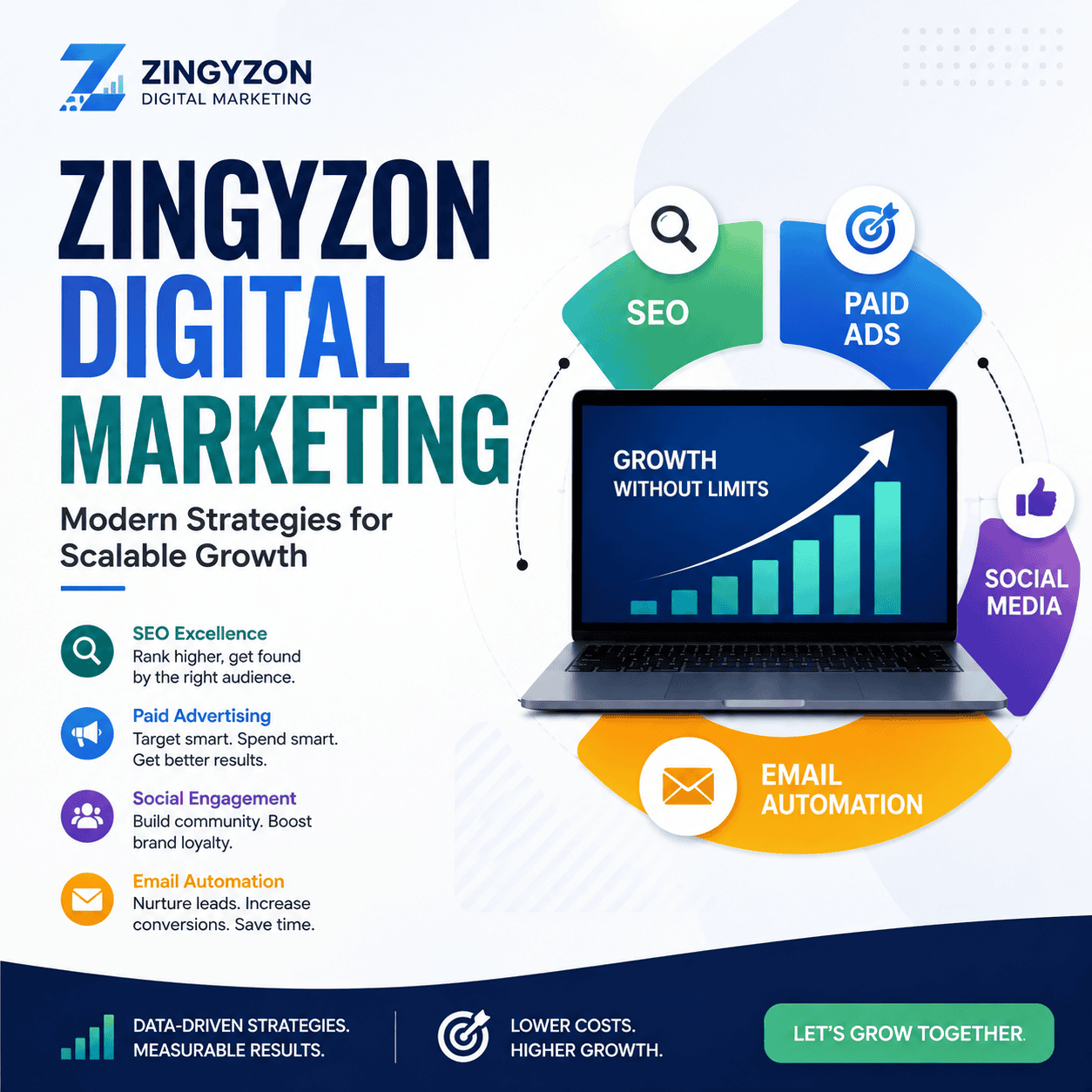
Zingyzon digital marketing is an integrated growth framework that combines search engine optimization, paid advertising, social media engagement, and automated email workflows to build market authority. It connects online marketing channels directly with financial goals to lower customer acquisition costs and drive sustainable business growth.
Strategy and Goals in Modern Digital Marketing
Alignment of Corporate Goals and Marketing Metrics
Digital marketing plans must connect directly to measurable business outcomes. Running marketing campaigns without strategic alignment leads to wasted ad budgets, inconsistent messaging, and missed growth opportunities. Companies that formally document their marketing plans are far more likely to report commercial success than those operating with informal tactics. Strategy development begins by setting clear financial targets, such as customer acquisition cost ceilings, annual revenue growth expectations, and target market expansion timelines. Operational models like Objectives and Key Results help marketing teams translate high-level business goals into specific daily actions. This structural alignment ensures that team members focus on generating revenue instead of tracking vanity metrics like page views or social media likes.
The Strategic Website Hub
A corporate website serves as the central hub for all online marketing initiatives. Paid advertisements, social media campaigns, email newsletters, and organic search listings all direct prospective customers back to this central location. If a website suffers from slow page load speeds, confusing navigation, or poor mobile formatting, incoming traffic will leave without converting. Technical performance, clean web design, visible call-to-action buttons, and clear messaging are required before launching paid campaigns or content projects. Without a solid website foundation, marketing investments yield poor financial returns.
The Three Pillars of Marketing Systems
Scalable digital marketing operates across three core pillars: strategic planning, creative execution, and technical infrastructure. Strategic planning defines target audience personas, core brand positioning, and sales funnel stages. Creative execution produces clear written copy, eye-catching visual graphics, and engaging video assets. Technical infrastructure manages analytics platforms, customer relationship management databases, ad platform tracking pixels, and automation software. When these three pillars function together, businesses establish a reliable and repeatable customer acquisition engine.
| System Pillar | Strategic Role | Core Operational Components | Primary Business Metrics |
| Strategic Planning | Connects digital campaigns directly to revenue targets | Competitor audits, persona research, sales funnel design | Revenue growth, market share, acquisition cost limits |
| Website Infrastructure | Functions as the central conversion hub for web traffic | Mobile responsiveness, fast page speeds, clear call-to-action buttons | Conversion rate, site load speed, page exit rates |
| Creative Execution | Communicates brand value across multiple channels | Article writing, graphic design, video production, ad copywriting | Click-through rate, user engagement, video watch time |
| Technical Marketing | Automates data capture, user tracking, and ad delivery | CRM integration, ad tracking, web analytics dashboards | Return on ad spend, tracking accuracy, lead speed |
Search Engine Optimization and Modern Search Engines
Technical SEO Infrastructure
Search engine optimization is one of the most cost-effective channels for long-term customer acquisition. By building higher organic search visibility, businesses attract users who are actively searching for solutions online. Technical SEO provides the foundation that allows search engines to crawl, index, and evaluate web pages efficiently. Key technical priorities include site speed optimization, clean site architecture, mobile responsiveness, secure data protocols, and XML sitemaps. Clean technical code allows search engine bots to navigate site structures easily, ensuring critical commercial pages rank correctly.
On-Page Optimization and Natural Language Processing
On-page optimization aligns web page elements directly with search user intent. Keyword research helps marketers understand whether searchers seek general information, feature comparisons, or direct purchases. Placing targeted keywords in title tags, page headings, meta descriptions, and main text body clarifies page topics for search algorithms. Modern search engines rely heavily on natural language processing to understand search context rather than matching exact keywords alone. Writing comprehensive content that answers user questions naturally satisfies search intent and improves organic search rankings.
AI Search and Generative Engine Optimization
The growth of artificial intelligence in search engine interfaces introduces Generative Engine Optimization. AI search tools summarize online information, answer user questions directly, and cite authoritative websites as sources. To rank inside AI search summaries, content must be structured logically with clear definitions, fact-checked data, bulleted summaries, and comparison tables. Establishing topical authority through clear, factual writing increases the probability that AI tools will cite a website as an expert source.
Off-Page Authority and Backlink Building
Off-page SEO establishes domain authority through external validation signals. Search engines treat links from reputable third-party websites as votes of confidence in content quality. Developing a strong link profile requires acquiring backlinks through guest articles, original industry research reports, digital public relations, and business directory citations. Link quality and topical relevance are much more important than sheer link quantity for maintaining strong search authority.
| Optimization Type | Traditional Search Engine Optimization | Generative Engine Optimization | Operational Business Impact |
| Main Objective | Rank on standard organic search engine result pages | Appear as a cited source in AI answer summaries | Captures high-intent search traffic across modern search engines |
| Content Structure | Keyword-optimized header tags and long-form text | Direct answer blocks, clear data tables, structured facts | Speeds up data extraction for automated search bots |
| Authority Signals | External backlink quantity and domain authority | Subject matter accuracy, entity trust, expert citations | Protects organic search visibility as search tools evolve |
| Success Metrics | Organic search ranking position and click volume | Citation frequency and referral traffic from AI platforms | Diversifies organic traffic channels beyond standard search links |
You can read it also: Zingyzon SEO Strategy Guide | Boost Rankings & Organic Traffic Fast
Content Marketing and Educational Authority
Topic Clusters and Editorial Calendars
Content marketing fuels search optimization, social channels, paid ad campaigns, and email workflows. High-performing content teams use topic cluster models to organize content creation. A topic cluster consists of a broad pillar page connected to multiple detailed subtopic articles through internal links. This interlinked structure signals complete topical authority to search engine algorithms. Organizing publishing schedules through 90-day editorial calendars maintains consistent content releases across blog posts, case studies, video scripts, and social graphics.
Building Trust Through Customer Education
Modern buyers evaluate products extensively before contacting sales teams or making purchases. Producing objective educational content builds strong consumer trust during early research stages. Detailed guides, technical teardowns, comparison articles, and transparent pricing breakdowns answer prospect questions without aggressive sales pressure. Establishing authority during early customer research stages improves conversion rates when buyers reach final decision points.
Gated Content for Lead Generation
Gated content exchanges valuable educational resources for prospective customer contact details. High-value gated assets include industry benchmark reports, ROI calculation spreadsheets, whitepapers, downloadable templates, and live webinars. Gathering names, email addresses, and phone numbers from interested readers builds a database of qualified leads for automated follow-up campaigns.
Paid Advertising for Fast and Scalable Acquisition
Search Ads and High Commercial Intent
Paid advertising delivers rapid visibility and instant market testing while organic search strategies grow over time. Search ads on platforms like Google place business listings at the top of search results pages for specific commercial keywords. Search ad campaigns capture prospects who demonstrate immediate purchase intent. Effective search management involves setting realistic bid limits, refining negative keyword lists, improving ad Quality Scores, and creating dedicated landing pages that match search query intent.
Social Advertising and Visual Targeting
Paid social media advertising on platforms like Meta and LinkedIn targets users based on demographics, professional roles, and personal interests. Visual ad units, short video clips, and carousel cards highlight brand benefits inside user news feeds. Social platforms also offer lookalike audience modeling, which evaluates existing customer lists to target similar prospective users across the network.
Retargeting Strategies and Conversion Lift
A significant majority of first-time website visitors leave without completing a purchase or lead form. Retargeting campaigns use browser tracking pixels to show tailored ads to past visitors as they browse other web pages. Retargeting reminds prospects of products they viewed, addresses common buying objections, displays social proof, and offers incentives to encourage return visits.
| Paid Ad Channel | Target Audience Intent | Common Ad Formats | Key Campaign Focus |
| Google Search Ads | High commercial intent | Text ad units, dynamic search ads | Keyword matching, landing page relevance, Quality Score |
| Meta Paid Ads | Brand discovery and awareness | Single image, video Reels, carousel units | Visual creative design, demographic audience targeting |
| LinkedIn Ads | Professional B2B intent | Sponsored posts, message ads, lead forms | Job title filters, industry firmographics, lead capture |
| Display Retargeting | Re-engagement intent | Visual banner ads, dynamic product ads | Frequency limits, special offers, audience segmentation |
Social Media and Community Engagement
Platform Native Content
Social media channels help brands build active communities and maintain ongoing communication with target audiences. Scaling social reach requires tailoring content formats to match user expectations on each platform. Professional networks like LinkedIn favor text insights, slide presentations, and industry analysis. Consumer platforms like Meta, Instagram, and TikTok perform best with short video reels, dynamic graphics, interactive polls, and behind-the-scenes content.
Community Management and Social Proof
Social media marketing works as a two-way communication channel rather than a broadcast system. Responding quickly to user comments, managing direct messages, and interacting with customer posts builds strong brand relationships. Featuring authentic social proof like client reviews, customer video testimonials, and detailed case studies on social channels reduces prospect hesitation and builds trust.
Marketing Automation and Lifecycle Nurturing
Behavioral Email Sequences
Marketing automation provides the infrastructure needed to expand operations without proportional cost increases. Email marketing remains a reliable, high-return channel for converting prospects into paying clients. Automated email sequences send customized messages based on user activity triggers. Welcome sequences educate new email subscribers, cart abandonment series recover lost sales, and post-purchase campaigns share product usage instructions.
Customer Onboarding and Retention
Growth strategies focus heavily on retaining existing customers to increase long-term account values. Automated onboarding emails guide new buyers through setup steps, accelerating initial product value. Automated satisfaction surveys and check-in workflows identify unhappy accounts early, allowing support teams to resolve issues before customer churn occurs.
Referral Programs and Repeat Purchasing
Existing customers offer a cost-effective path for acquiring new accounts. Incentivized referral programs encourage loyal buyers to recommend products to colleagues and friends. Automated loyalty programs, birthday rewards, and VIP discounts encourage ongoing repeat purchases and transform satisfied clients into active brand advocates.
| Lifecycle Phase | Primary Marketing Goal | Delivery Channels | Automated Trigger Events |
| Welcome Phase | Introduce brand value and deliver requested asset | Email sequence, web portal | Gated content form fill or new account sign-up |
| Mid-Funnel Lead Nurture | Educate prospective buyer and resolve objections | Automated email, retargeting ads | Repeated visits to pricing or feature pages |
| Shopping Cart Recovery | Recover incomplete purchase actions | Email notifications, SMS alerts | Leaving shopping cart before final checkout |
| Customer Onboarding | Drive product adoption and initial satisfaction | In-app messages, email guides | Completed purchase or contract signature |
| Retention and Loyalty | Prevent customer churn and boost repeat orders | Automated email surveys, loyalty apps | Account inactivity or account tenure milestones |
Frameworks and Analytics for Performance Optimization
Core Growth Frameworks
Established marketing frameworks provide clear rules for campaign design and execution. The RACE framework manages customer lifecycles across four steps: Reach, Act, Convert, and Engage. The SOSTAC planning structure guides strategy through Situation, Objectives, Strategy, Tactics, Actions, and Control. The AARRR framework, also called Pirate Metrics, measures funnel health across Acquisition, Activation, Retention, Referral, and Revenue.
The Six Phase Implementation Framework
Deploying a digital marketing framework follows a six-phase process. Phase one conducts market and competitor audits. Phase two maps buyer persona details. Phase three sets channel choices and budget splits. Phase four establishes editorial content calendars. Phase five launches campaigns with automated A/B testing. Phase six manages continuous performance analytics and monthly budget tuning.
Data Integration and Performance Tracking
Centralized analytics platforms consolidate campaign data from multiple sources into unified dashboards. Connecting web analytics like Google Analytics 4 with CRM reporting tools shows how leads move through sales funnels. Multi-touch attribution models show which marketing touchpoints contribute to final conversions, enabling data-driven budget allocations.
| Business Metric | Calculation Formula | Strategic Importance |
| Customer Acquisition Cost | Total Marketing and Sales Spend / New Customers Acquired | Measures the capital efficiency of customer acquisition efforts |
| Customer Lifetime Value | Average Order Value x Purchase Frequency x Customer Lifespan | Establishes sustainable ad spending limits for new customer acquisition |
| Return on Ad Spend | Revenue Generated from Advertising / Total Advertising Cost | Evaluates the direct profit generated by paid ad channels |
| Conversion Rate | (Total Action Completed / Total Site Visitors) x 100 | Highlights conversion friction points across web pages and forms |
| Customer Churn Rate | (Customers Lost During Period / Total Customers at Start) x 100 | Measures customer retention, satisfaction, and revenue stability |
Execution Models Across Different Business Sectors
Business to Business Marketing Dynamics
B2B digital marketing involves extended sales cycles, larger transaction values, and multi-person decision committees. Growth channels include LinkedIn advertising, search engine optimization, gated whitepapers, email nurture series, and technical webinars. Marketing performance is measured by Marketing Qualified Lead generation, Sales Qualified Lead transfers, and sales pipeline value.
Business to Consumer Marketing Dynamics
B2C marketing focuses on short buying cycles, impulse purchases, and broad consumer appeal. Dominant channels include Meta ads, Google Shopping, influencer partnerships, and short-form video. Key operational metrics center on Return on Ad Spend, conversion rates, average order values, and shopping cart recovery rates.
High Value Service Marketing
Promoting specialized high-value services, such as medical care, dental implants, or legal representation, requires establishing deep trust. Potential clients research solutions for weeks or months before committing. Marketing strategies must combine educational video content, high-intent local search optimization, review collection, and retargeting ads to guide prospects through long research journeys.
Budget Allocation and Testing Protocols
Strategic Resource Allocation
Managing marketing capital effectively requires balancing safe investments with creative growth tests. A balanced distribution allocates 60% to 70% of budgets to proven channels that deliver predictable returns. 10% to 20% of resources fund pilot tests on new platforms or channels. The final 10% to 20% covers analytics dashboards, tracking software, and reporting tools.
Hypothesis Driven Testing and Experimentation
Systematic testing yields continuous conversion rate improvements. Growth teams run A/B tests comparing original control layouts against modified variants. Common test variables include landing page headlines, call-to-action button copy, lead capture forms, email subject lines, and ad visuals. Running tests until results reach statistical confidence ensures decisions rest on real data.
Regular Audits and Performance Tuning
Digital strategies require continuous tuning rather than static execution. Teams conduct monthly performance reviews to track customer acquisition costs, channel return on investment, and conversion health. Underperforming campaigns should be paused or restructured, allowing capital to flow toward top-performing tactics.
You can read it also: Zingyzon Online Earning | Complete Step-by-Step Guide (2026)